
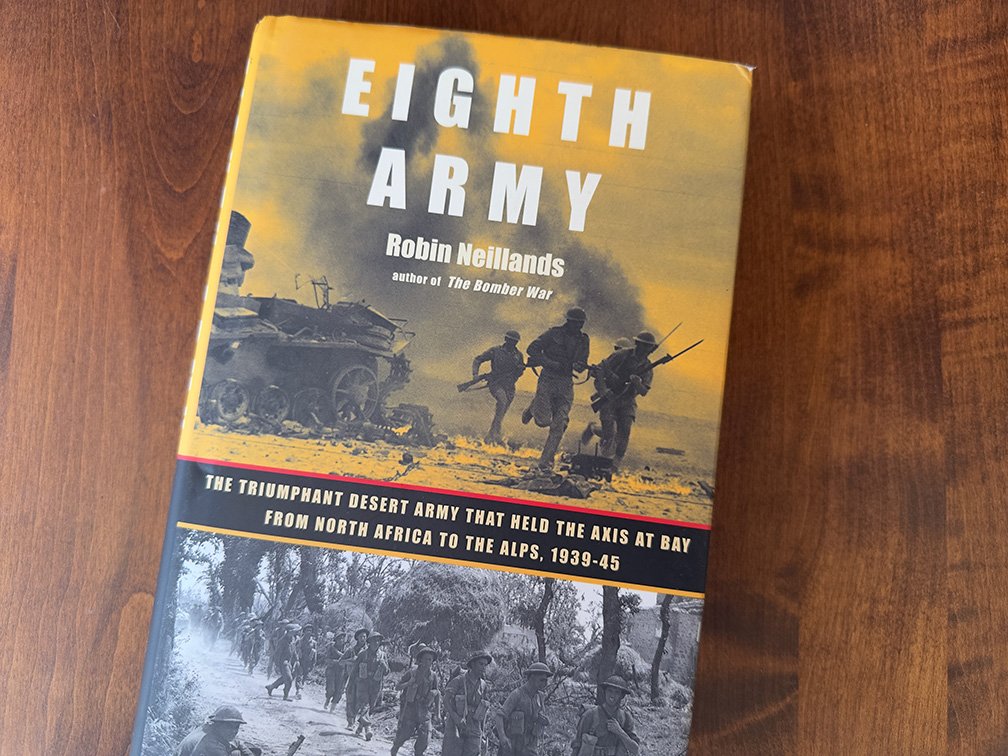
The British 8th Army came together in 1939 in the desert of North Africa to deal with the aggression of Italy and Germany. Four years later, Eighth Army was disbanded after defeating Italy and Germany in Northern Italy. Robin Neillands covers the entire history of the army from formation to disbandment.
Reading Alamein by Jon Latimer really helped me with reading Eighth Army. Everything was just a firehouse of new information in Alamein, but when I read Eighth Army it was somewhat more familiar. Since Neillands told a much longer tale, there wasn’t time for all the detail. There was still a lot of detail, though. The thing I was most thankful for were the maps and organization list breaking down an Army from the top level to most basic units. Neillands didn’t describe units much below brigade size, but it was nice to see what I was dealing with.
The Generals
/On this pass through the story, more of the names than Montgomery and Rommel stuck with me. And I did gain some insights into these men, small insights, but insights none the less. It’s amazing we don’t hear more about General Alexander who was in charge of the whole theater. Auchinleck seems to get short shrift in favor of Montgomery. All these great men seemed to have made plenty of bone head moves. Lots of the battles, especially later on in Italy, could have gone better except for the need to take Divisions away from Eighth Army and send them to other battles.
North Africa and Italy
Neilland argues 8th Army was at it’s best when it fought in North Africa, when it was mainly a British operation struggling with Rommel. I still find it amusing Rommel wasn’t there for the start of the battle of Alamein because he was in hospital in Germany struggling with Jaundice. And the whole North African campaign was just one giant race through Libya and Tunisia as Rommel tried to save what units he could while Montgomery struggled with supply issues to keep the pressure on Rommel. If the Germans had their way, they would simply have left North Africa after the Alamein defeat because they didn’t have the resources to fight. They stayed put and fought because the Führer wouldn’t let them.
Once the action turns to Italy, the dynamic changes as 8th Army has to work with the American 5th Army and the loss of Montgomery. Neilland makes the case Italy might have gone faster if so many of the units hadn’t been shifted to Britain to help with operation Overlord. It also didn’t help the American commander for 5th Army seemed more concerned with self-aggrandizement than in working with his counterparts. All that being equal, Italy was still a terrible place to wage war with the advantage going to the German defenders over the offense of the Allied forces. Probably why Eighth Army spent two years in Italy to the one year after Alamein fighting in North Africa.
Mules
I liked the book a lot. The style was very clear and told me a lot of things I didn’t know. One of the stories in my grandfather’s book talks about Doctor Wall and his invention to help find shrapnel in mules bodies. When I originally read the story, I couldn’t fathom why that would be such an important invention. In Neillands book, he discusses the huge mule teams used by both Armies to transport supplies up these rocky mountains to the soldiers. In some cases it was the only way to get the fighting forces munitions.
No Love for the Air Force
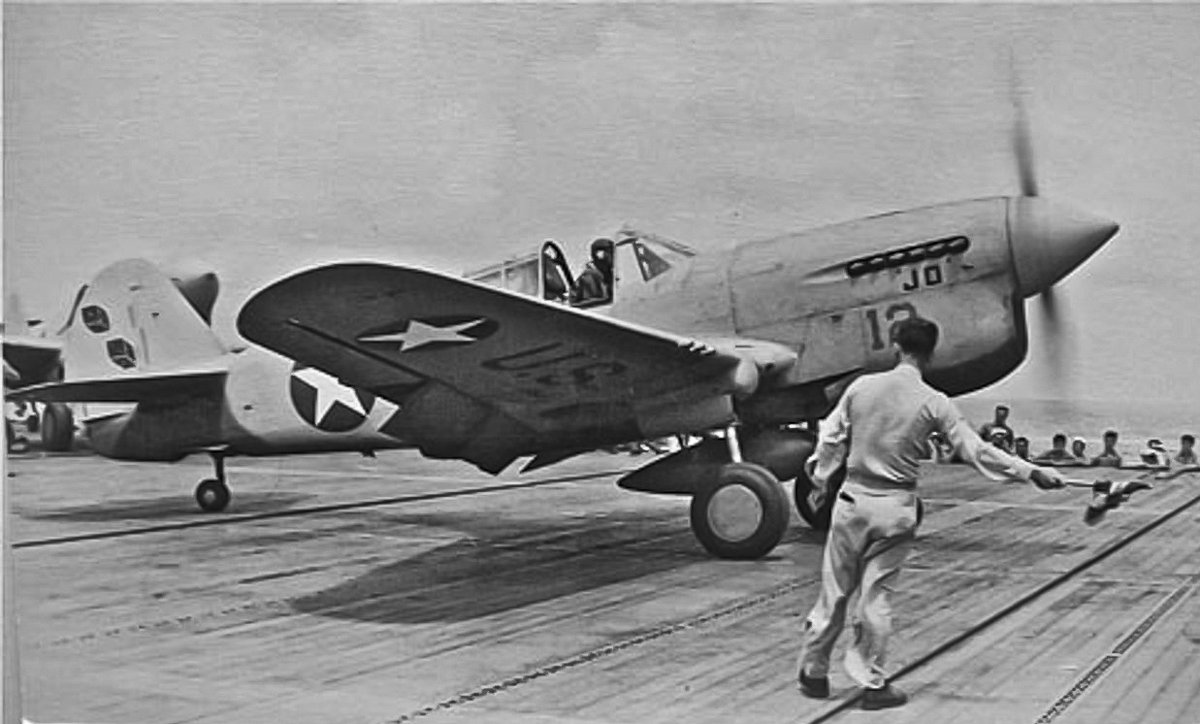
One of the big weaknesses of the book, from my very narrow viewpoint was the lack of coverage of the part played by the Air Force. I can’t remember a single mention of how the Air Force helped with the battles. I know for sure they never mentioned the 57th Fighter Group. First thing I checked when I picked up the book was to see if there was any mention of them in the Index. At least Alamein mentioned them twice. I’m curious why the omission. Granted, the total number of men in the 57th Fighter Squadron was less than a 1000 men. When you compare that to the millions of men on the ground, the 57th was just a blip.
Discounts, Giveaways, & Other News
Max one email per week


0 Comments